
More durable wound healing with proven long-term reductions in DFU recurrence, hospitalizations, and amputations, resulting in reductions to total cost of care
More durable wound healing with proven long-term reductions in DFU recurrence, hospitalizations, and amputations, resulting in reductions to total cost of care
REAL WORLD EVIDENCE STUDY
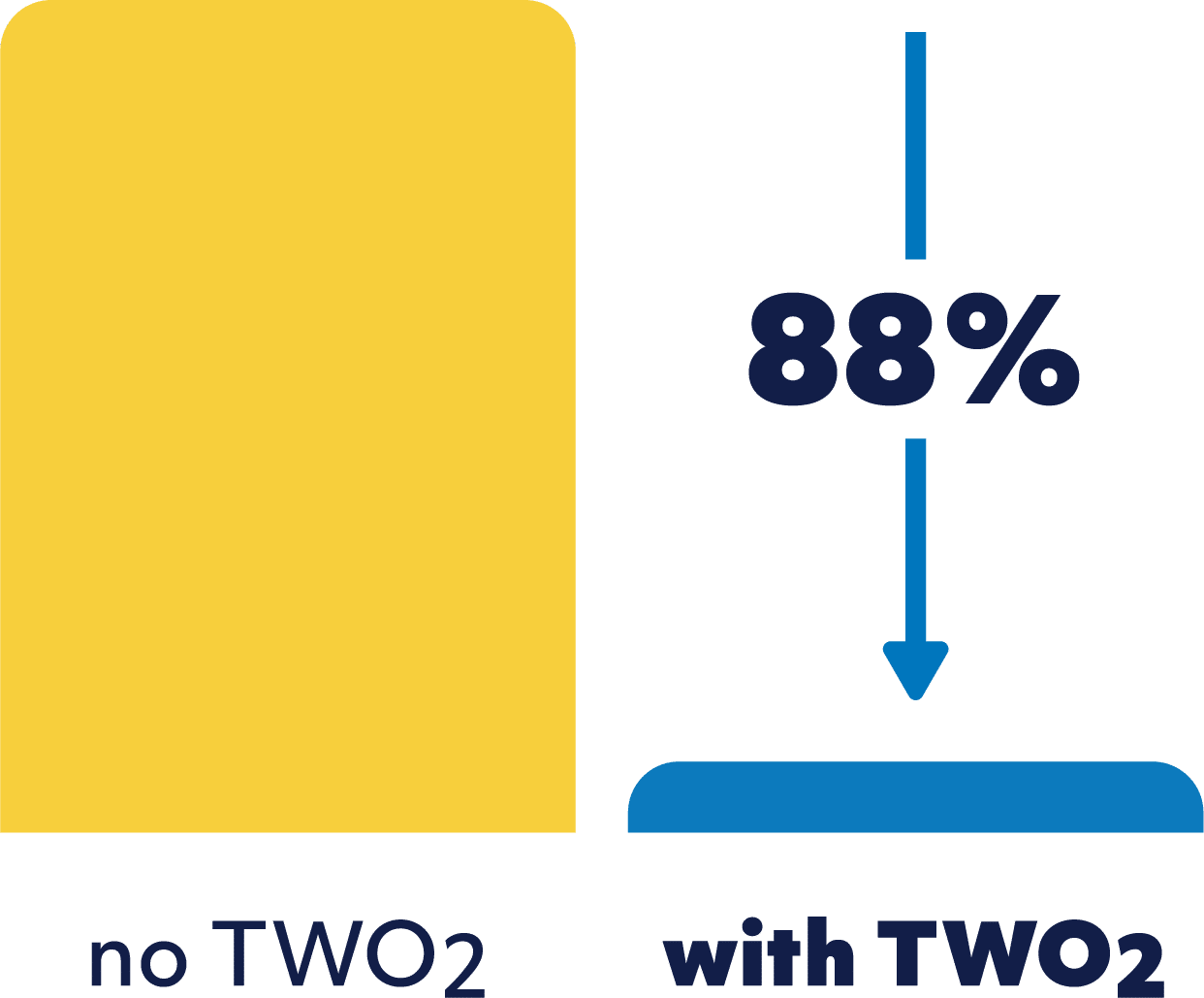
REDUCTION in Hospitalizations
REAL WORLD EVIDENCE STUDY
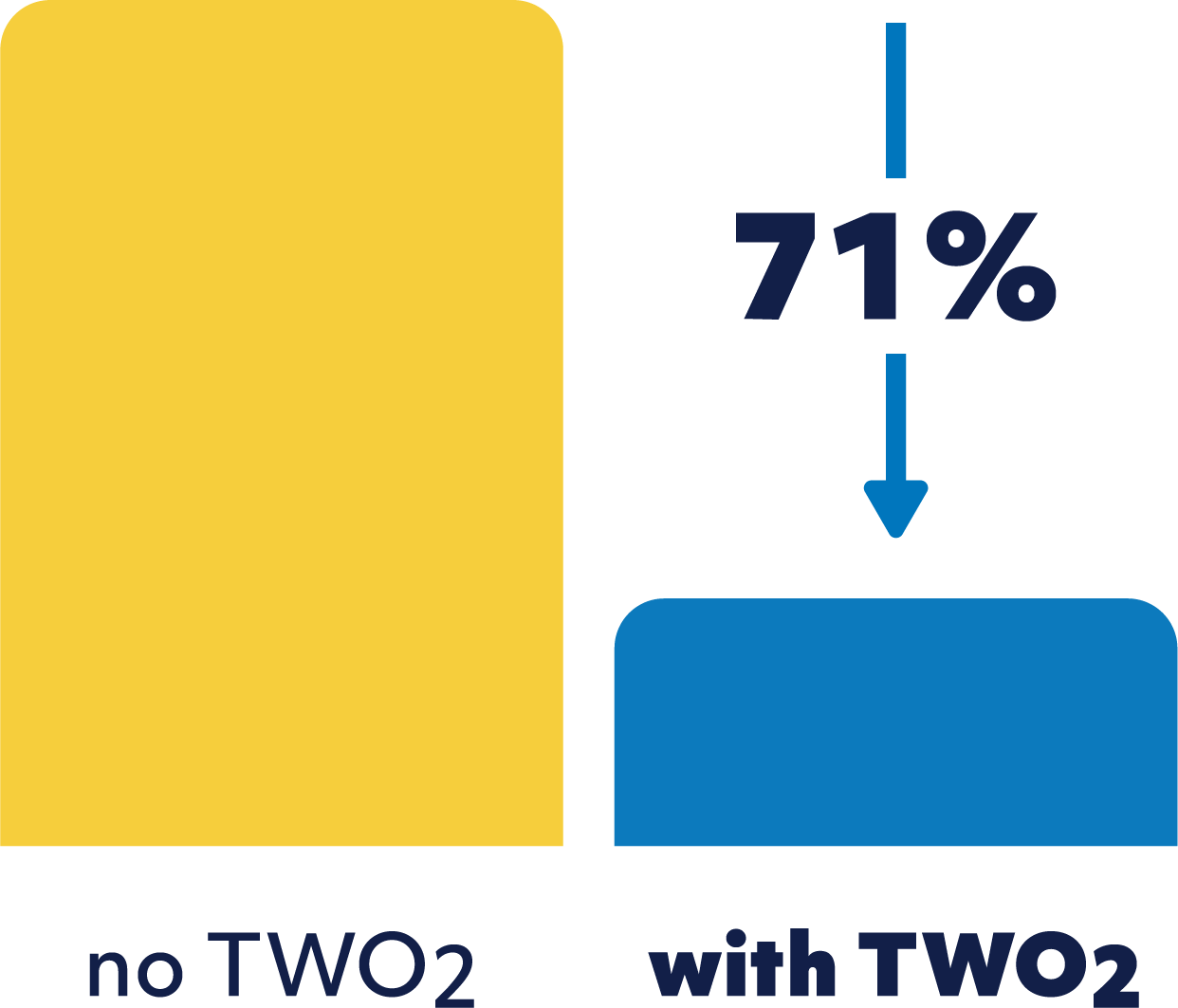
REDUCTION in Amputations
RANDOMIZED CONTROLLED TRIAL
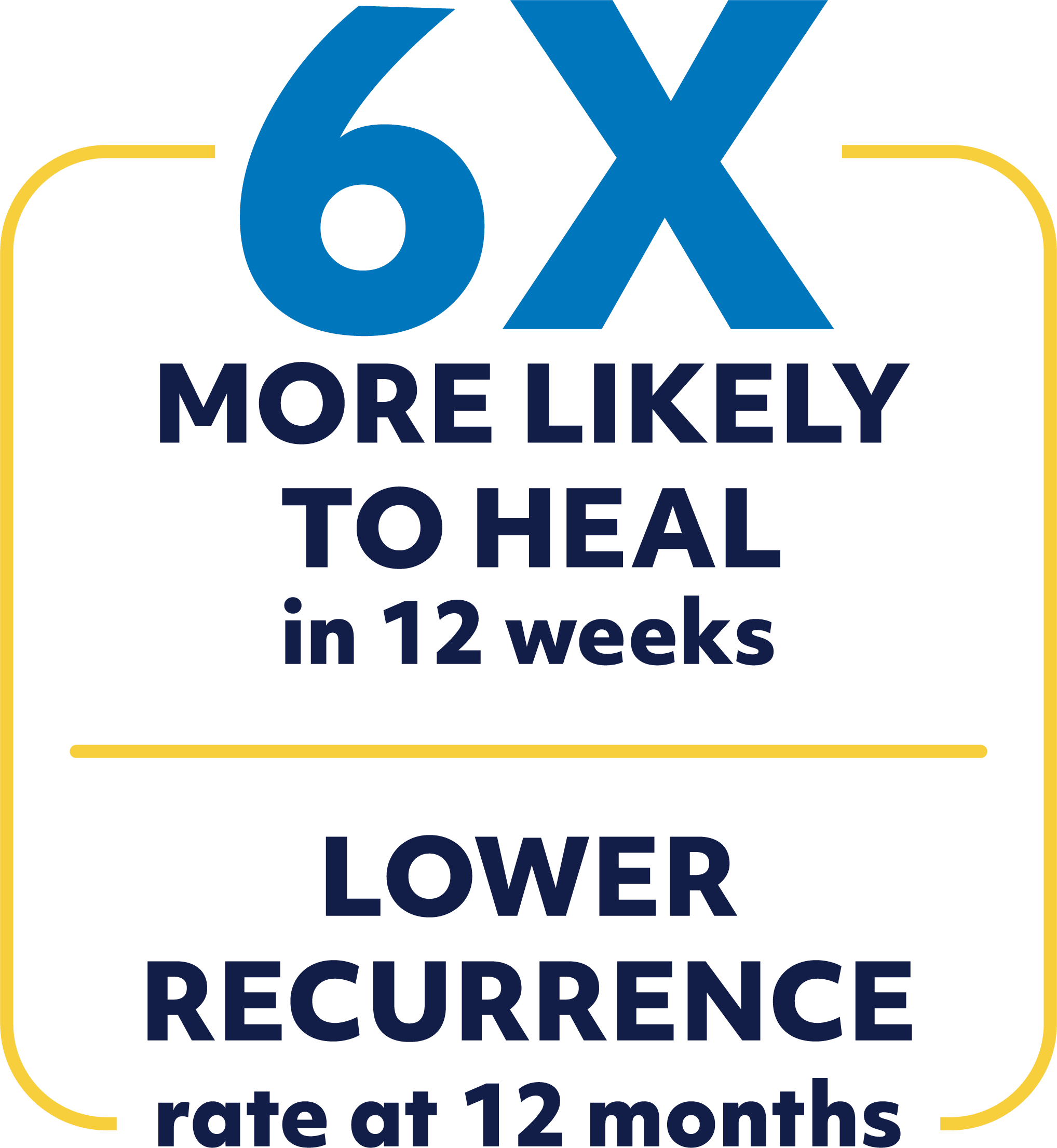
Compared to standard of care alone
The secret to durable healing is multi-modality TWO2 therapy
The secret to durable healing is multi-modality TWO2 therapy

Oxygen
TWO2 delivers high pressure O2 which results in greater tissue diffusion and restoration of normal wound metabolism, critical to restoring normal wound metabolism, allowing for more effective and durable healing.

Compression
TWO2 applies non-contact cyclical compression which reduces edema and mobilizes blood and lymphatic fluids, enhancing oxygen diffusion and neovascularization.

Humidification
TWO2 supplies a fine particulate mist which helps to create the ideal level of humidity for effective wound healing.
Driving Change TOGETHER

The American Diabetes Association awarded Topical Oxygen Therapy an A-grade adjunctive treatment recommendation for diabetic foot ulcers.
Thousands of patients have benefited from using Topical Wound Oxygen (TWO2) therapy at home
Thousands of patients have benefited from using Topical Wound Oxygen (TWO2) therapy at home
Acclaimed by Clinicians

Dr. Guberman
Podiatric Surgeon
“Mainstay of my practice…most superior system”

Dr. Dua
Vascular Surgeon
“Being able to have the patient in the home, get[ting] their therapy is really the crux of delivery and access to care.”

Dr. Dexter
Vascular Surgeon
“TWO2 allows me to provide therapy to someone at home.”

What's Next?
CLINICIANS
Get in touch for a product demo.
PATIENTS
Talk to your doctor to see if an AOTI solution is right for you.